Return to : Basics of Audio
Work in progress! Don't read, kinda confusing now
Introduction
As the title suggests, Digital Audio is the term we use for audio (that is sound) that is in the digital form.
We covered in the Basics of Audio that sound can exist in the physical, analogue and digital form.
In this note we will cover Digital Audio, what it is, how it works, and how we can fully utilize it.
It is advised you are thoroughly familiar with the basics of audio before continuing on this next chapter.
Digital Signals
Similar to analogue signals (covered in Basics of Audio), digital signals also consist of electrical signals.
However, they translate and behave very differently from Analogue signals.
Where analogue signals look a lot like the image below :
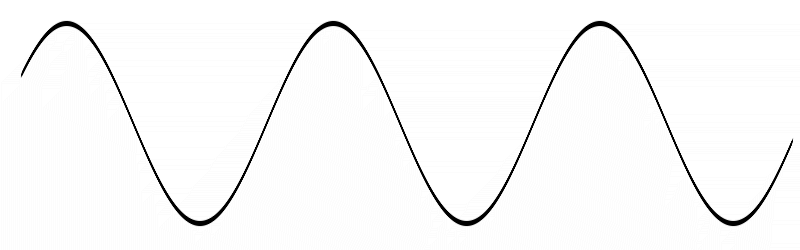
(Where the amplitude of the signal goes above and below 0 to signify amplitude and polarity)
Digital signals transmit electrical signals that only signify 1 or 0.
This is called BINARY
You can learn more about Binary here:
In summary, binary means that the signal is only either on, or off.
Therefore, for an audio signal to be transmitted (or any digital signal whatsoever) - there needs to be a pattern of 1's and 0's to follow so that both transmitter and receiver know what exactly those numbers mean.